


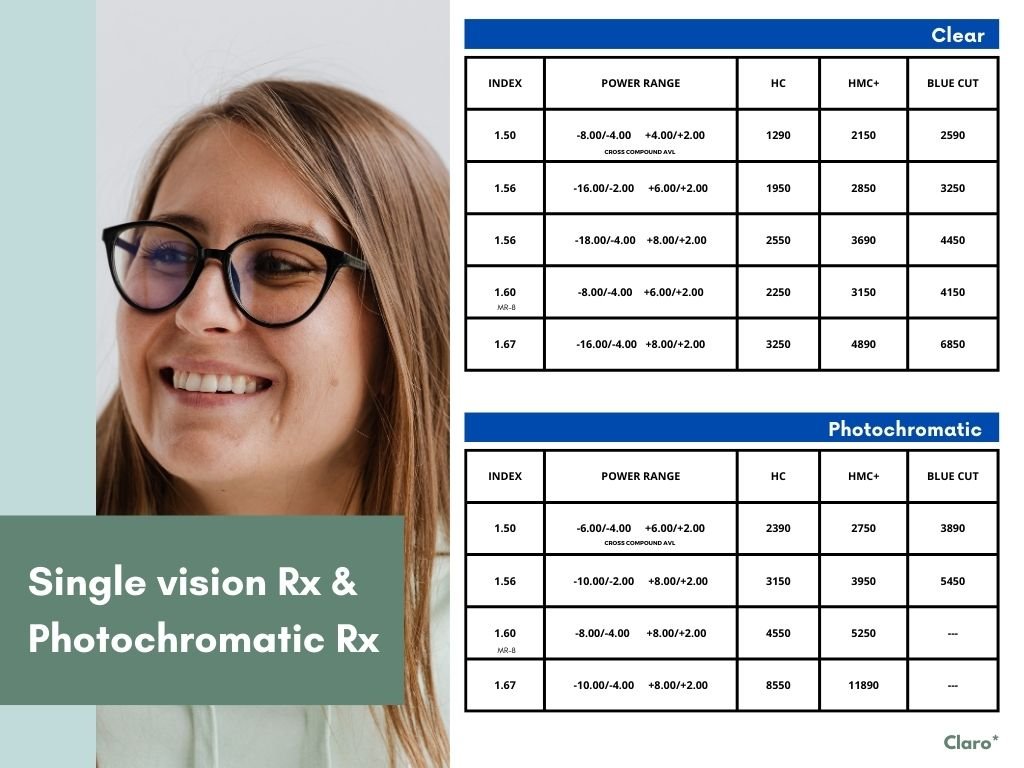
Category of lenses with their respective prices.
Single-vision
Single-vision lenses in eyeglasses correct your vision for just one distance—either close up or far away. In other words, the entire lens is correcting one vision problem.
The power range has been mentioned, which means that lenses are available up to a certain limit.
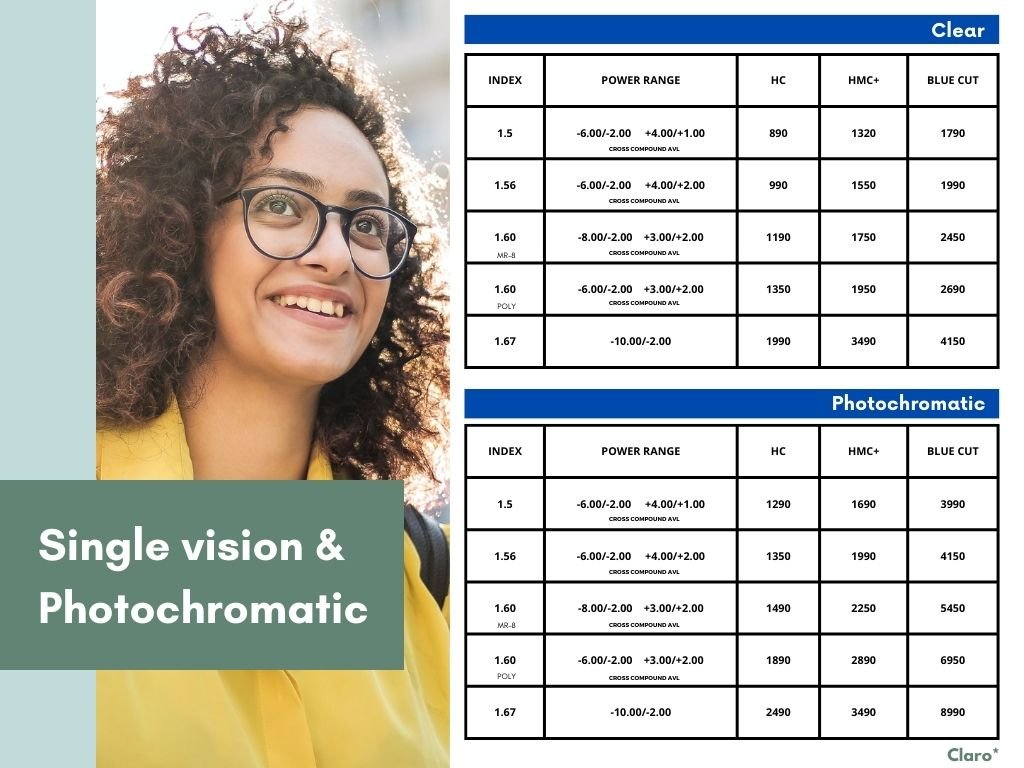
what is HC
These lenses are coated with a protective coating that increases the abrasion resistance of the lens material. It is strongly recommended that all plastic lenses be hard-coated.
What is HMC
Hard Multi Coat or Anti Reflection Coat
Coating guarantees performance and protection throughout the day by reducing reflection and glare that might be distracting to the wearer. Once reflection on your glasses is eliminated more light able to pass through the lenses and improve the sharpness of your vision.
HMC+
HMC+ lenses superior then HMC
It has advanced scratch-resistant, anti-reflective, and hydrophobic coated lenses on both sides.
INDEX
This category is recommended for high power prescriptions. If you want to make your glasses thinner or if thickness is causing problems for your vision and cosmetic look, this is the index option to choose.
This diagram illustrates the role of an index.
Single-vision Rx
Bifocal Lenses
A bifocal lens is used for the correction of presbyopia. A bifocal lens is created with two different areas of vision correction, which are divided by a distinct line that sits horizontally across the lens. The top portion of the lens is used for distant, while the bottom portion of the lens is used for closer vision.

Progressive lenses.
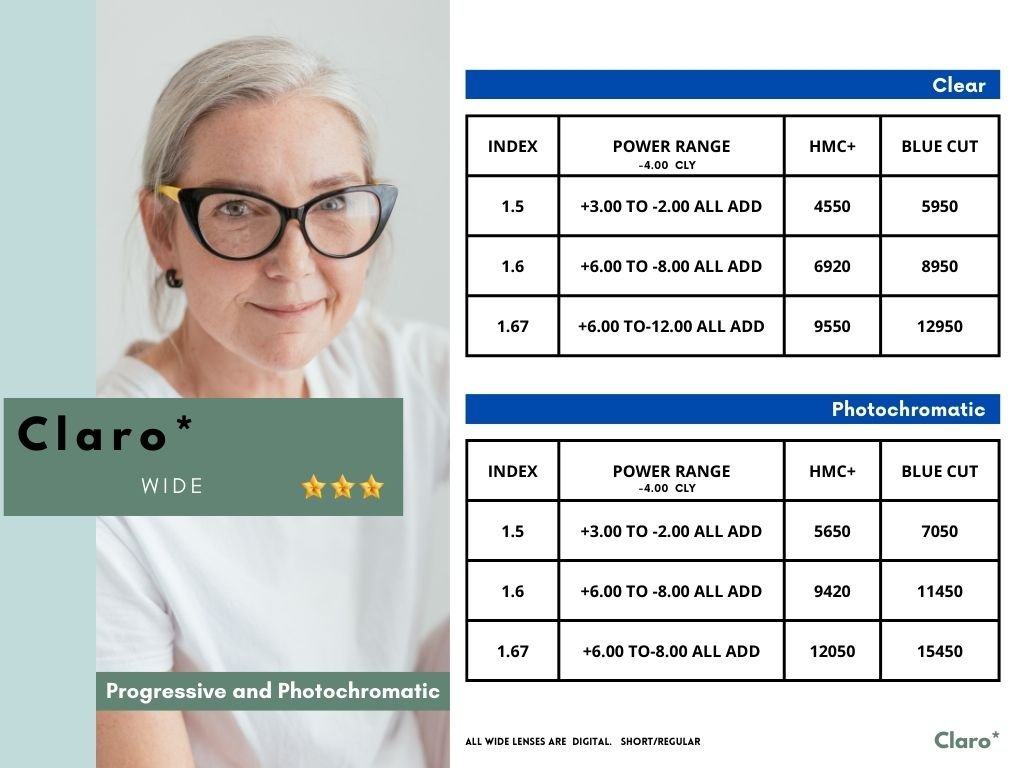
Progressive lenses are a type of lens which have no differentiating lines between the focal distances. These have three different levels of focal distances ranging from distance to near. They have no visible lines, so they can be considered a better pair of progressive lenses than single or bifocal lenses.
Designs of Progressive lenses
4 major power corridors of progressive lenses
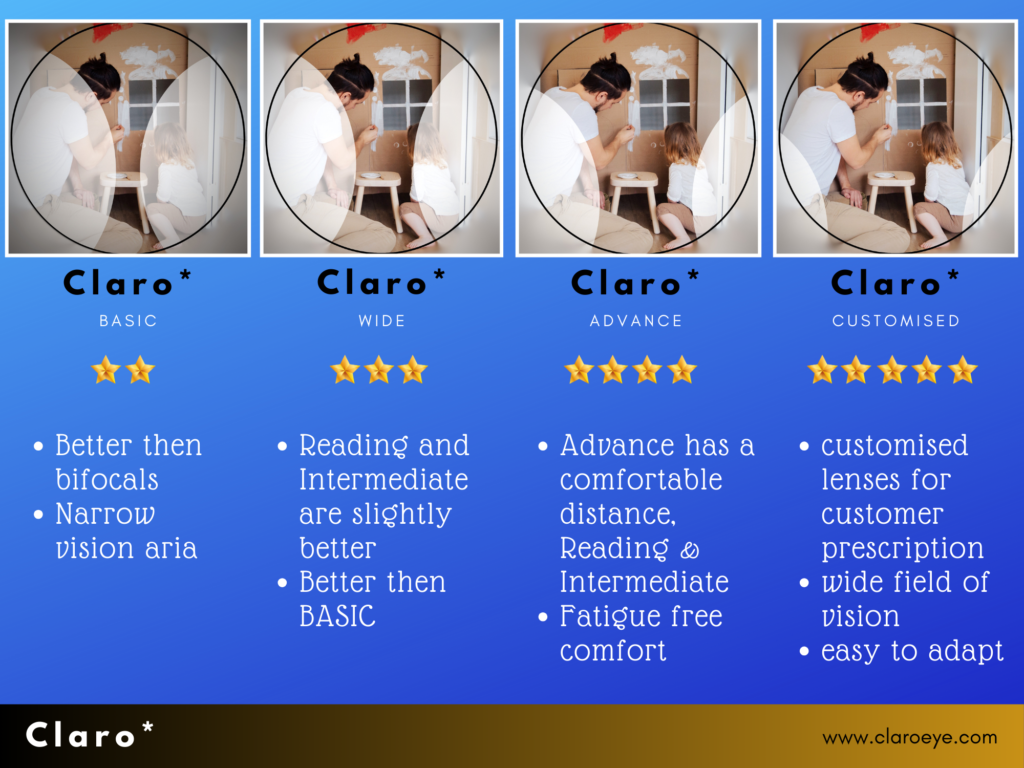
Basic progressive

Wide Progressive
Advance Progressive

Customised Progressive
