Common eye problems
Nearsightedness (Myopia)
Nearsightedness is an eye condition in which you can see nearby objects clearly, but faraway objects appear fuzzy or blurry. Nearsightedness is also called myopia.
Nearsightedness is extremely common and very treatable. According to the American Optometric Association (AOA), almost 30 percent of adults and children in the United States are nearsighted. (AOA)

NEARSIGHTEDNESS
How Does the Eye Work?
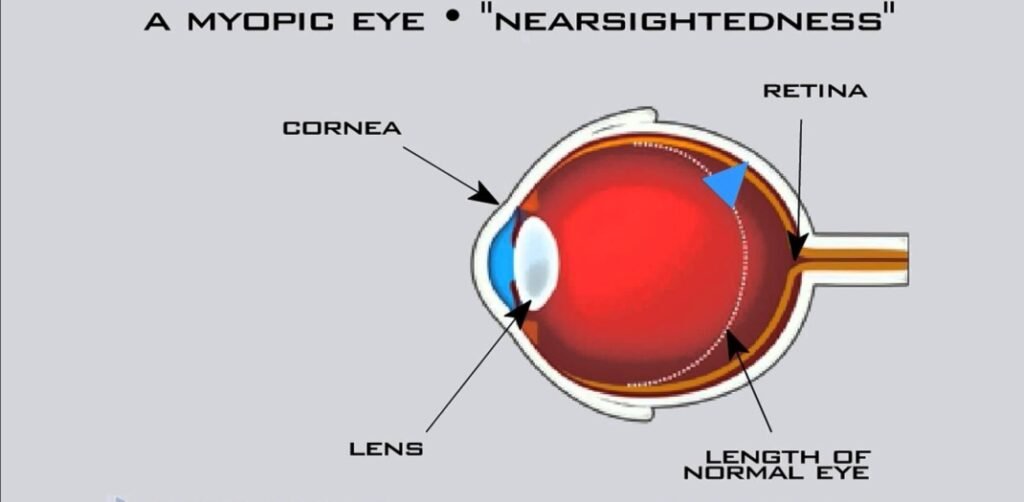
Nearsightedness is caused by a refractive error. A refractive error occurs when your eye does not focus light correctly. If you are nearsighted, your eye focuses light entering the eye in front of the retina instead of onto the retina.
The retina is the surface at the back of your eye that collects light. The retina changes the light into electrical impulses that your brain reads as images.
A myopic, or nearsighted, eye focuses incorrectly because its shape is slightly abnormal. A nearsighted eyeball is usually a little too long, and sometimes, its cornea is too rounded. The cornea is the clear covering on the front of your eye.
.
Risk Factors for Nearsightedness
According to the National Eye Institute (NEI), myopia is usually diagnosed between the ages of 8 and 12. (NEI) Your eyes are growing at this age, so the shape of your eyes can change. Adults usually remain nearsighted if they have the condition as a child. Adults can also become nearsighted due to certain health conditions, such as diabetes.
Visual stress can also be a risk factor for nearsightedness. Visual stress is eyestrain from doing detailed work, such as reading or using a computer. Nearsightedness can also be an inherited condition. If one or both of your parents are nearsighted, you are likely to be as well
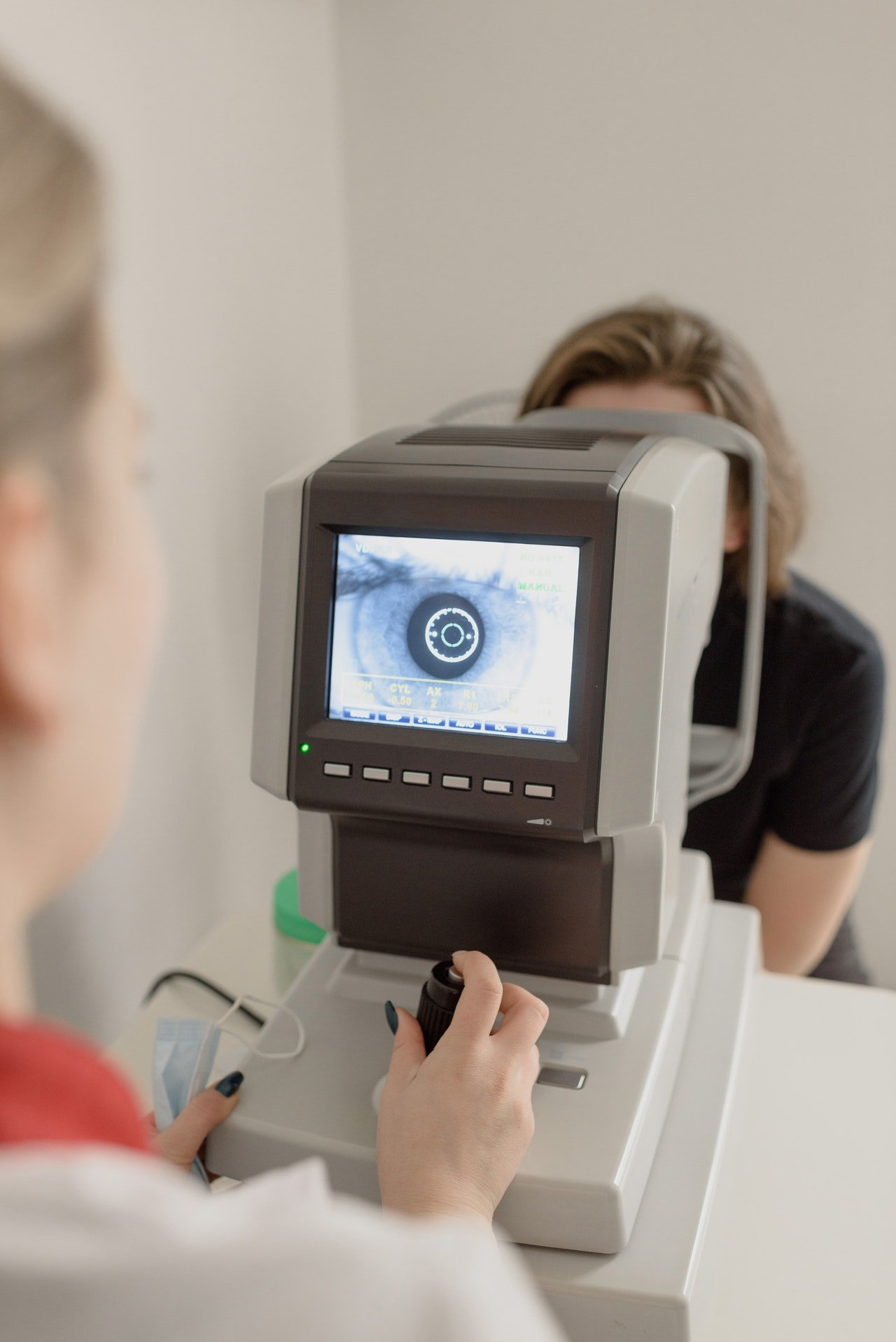
blurry vision Eye testing for refractive errors
Symptoms of Nearsightedness
The most obvious symptom of nearsightedness is blurry vision when looking at faraway objects. Children may have trouble seeing the blackboard at school. Adults might not be able to see street signs clearly while driving. Other signs of nearsightedness include:
headaches
eyes that hurt or feel tired
squinting
The symptoms of nearsightedness usually go away after treatment with eyeglasses or contact lenses. Headaches and eye fatigue may linger for a week or two as you adjust to your new eyeglass or contact lens prescription.
Treatment of Nearsightedness.
Your eye doctor can diagnose nearsightedness by performing a complete eye exam.
Correction for nearsightedness may include:
Corrective lenses
Corneal refractive therapy
Refractive surgery
Eyeglasses and contact lenses are examples of corrective lenses. These devices compensate for the curvature of your cornea or the elongation of your eye by shifting the focus of light as it enters your eye.
Your prescription strength will depend on how far you can see clearly. You may need to wear corrective lenses all the time or just for certain activities, such as driving.
Contact lenses generally give you a wider field of corrected vision than glasses. Contact lenses are applied directly to the corneas of your eyes. Some patients cannot tolerate contact lenses because they irritate the surface of their eyes.
Refractive surgery is a permanent form of correction for nearsightedness. Also called laser eye surgery, the procedure reshapes your cornea to focus light onto the retina. Most people who have refractive eye surgery no longer need to wear contact lenses or eyeglasses.
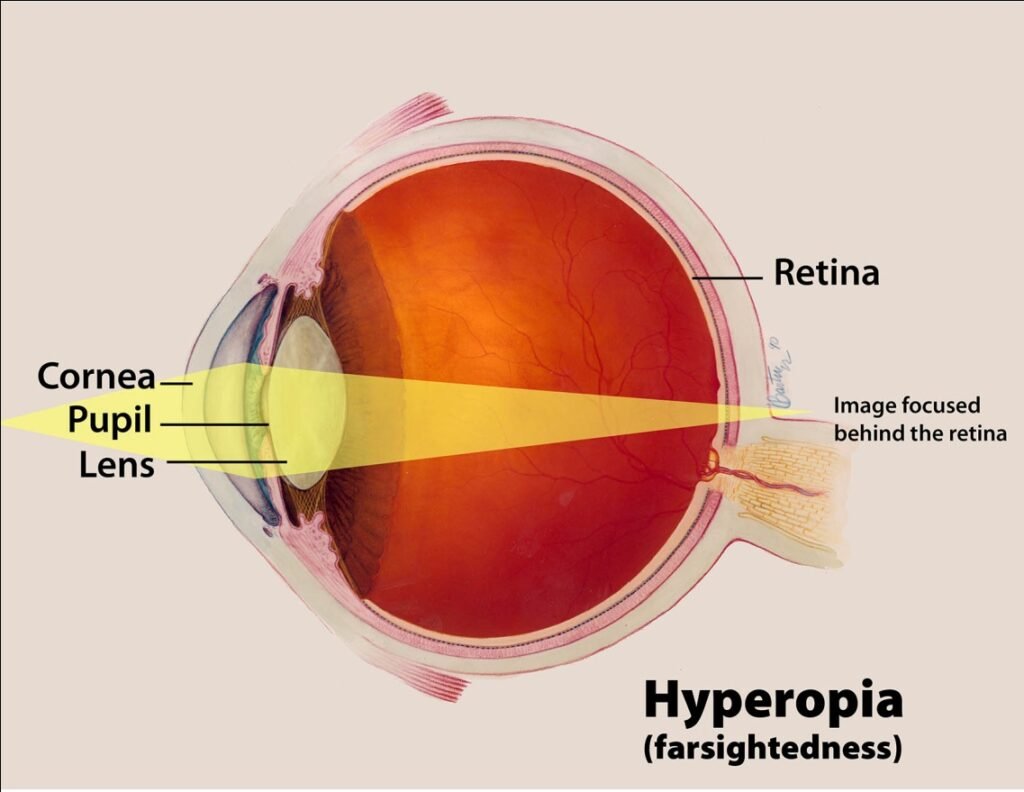
Farsightedness. (hyperopia)
Farsightedness means that it’s easy for you to see things that are far away, but your close-up vision is blurry. The technical term for farsightedness is hyperopia. People can have varying degrees of farsightedness, depending on their eyes’ ability to focus on close-up objects. If you can only clearly see objects that are very far away, you are very farsighted.
Two parts of the eye are responsible for focusing: the cornea and the lens. The cornea is the clear front surface of the eye. The lens is a structure inside your eye that changes shape as you focus on objects. The cornea and lens work together to refract (bend) incoming light, and then to focus that light onto your retina. The retina is at the back of your eyeball. It receives visual information and sends it to your optic nerve, which carries that information to your brain.
A perfectly formed curved lens and cornea results in a perfectly focused image. Your eye you can’t focus correctly when light enters if your cornea is too flat. This causes farsightedness. You can also be farsighted if you have a shorter-than-normal eyeball. This causes light to be focused behind your retina instead of on it. Farsightedness is very common and easy to correct. According to the National Eye Institute, five to 10 percent of Americans have this condition (NEI, 2012)
Causes of Farsightedness
You are more likely to have farsightedness if your parents have this condition. It often develops in adults as the lenses of your eyes age.
Symptoms of Farsightedness
If you’re farsighted, your eyes have to work hard to see anything up close. Some of the symptoms of farsightedness are due to this extra eyestrain. Symptoms include:
Tension
Fatigue
Blurry vision up close
Squinting to see better
an aching or burning sensation around your eyes
a headache after reading or other tasks that require you to focus on something up close
Some children develop strabismus (crossed eyes) because their farsightedness hasn’t been diagnosed and corrected. Farsightedness in children can also contribute to problems with learning to read and write.

Diagnosing Farsightedness
Make an appointment with an eye doctor if your vision is blurry when looking at objects up close. He or she can easily diagnose farsightedness during a basic eye examination.
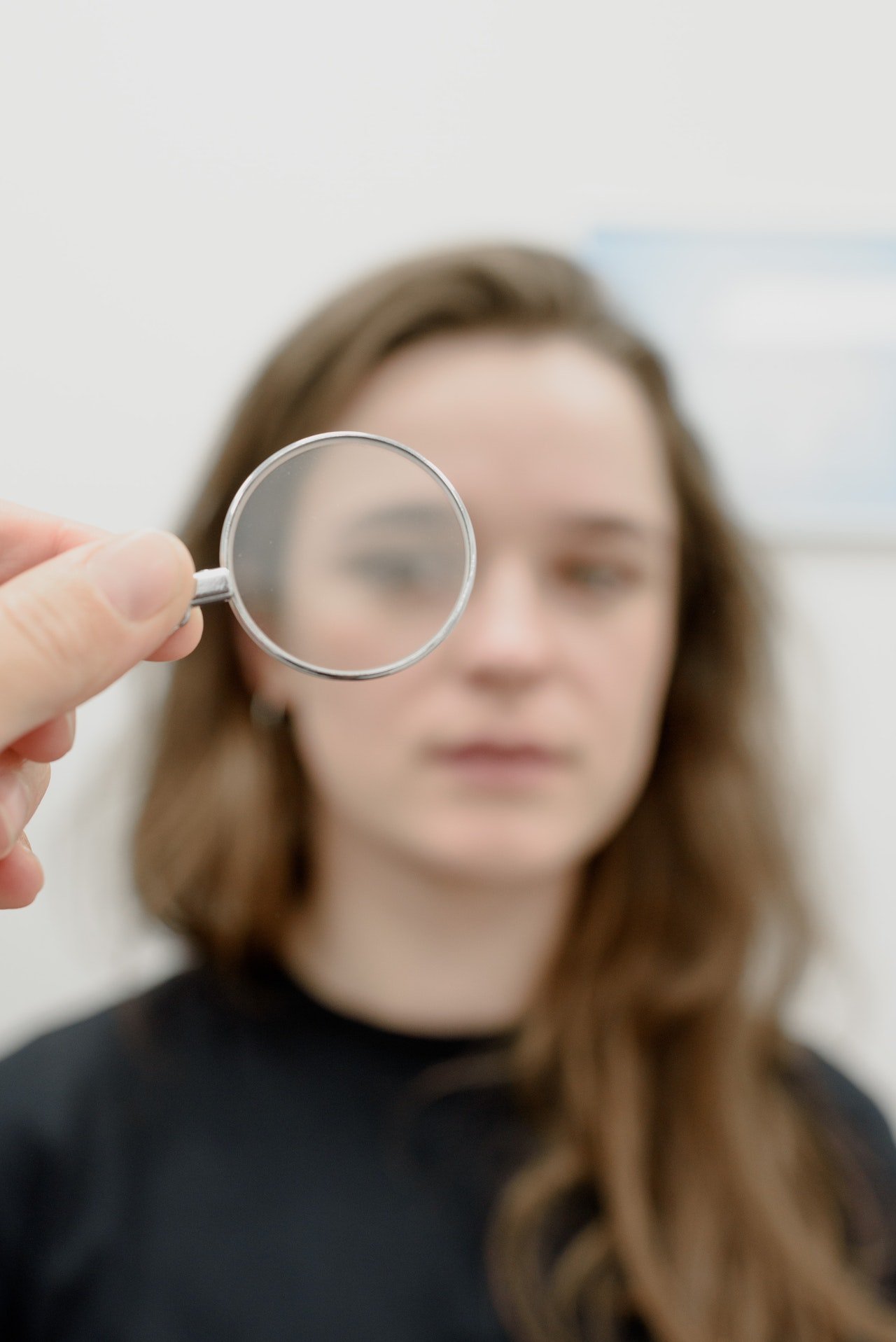
During the exam, your doctor will probably want to dilate (widen) your pupils (the black circles in the center of your eyeballs). He or she will put drops in your eyes that will do this. Then, the doctor will use a magnifying lens to look closely at your eyes. You might also need to look through and rate various glass lenses.
Farsightedness is not usually picked up in children’s vision tests at school. Usually, these tests involve reading charts of letters from across a room. This test only detects nearsightedness (the inability to see things far away).
Treatment of Farsightedness.
Young people’s eyes can often compensate for farsightedness because their lenses are still flexible. However, older people often find that their aging eyes require glasses for close-up tasks, such as reading or sewing.
The simplest way to correct farsightedness is to get prescription eyeglasses or contact lenses. These corrective lenses change the way light enters your eyes, helping you focus better.
Refractive surgery can also treat farsightedness. Procedures such as Laser-assisted in-situ keratomileusis (LASIK) are more commonly used to treat nearsightedness. However, they can also work if you’re farsighted. LASIK uses a laser to change your cornea’s curvature. This will make the light refract correctly, projecting a focused image onto your retina.
However, refractive surgery is not as safe as wearing glasses. Possible complications of this surgery include:
Over- or under-correcting your vision
Seeing a starburst or halo around lights
Infection
Dry eyes
While refractive surgery rarely causes severe complications, it is still possible that it may damage your vision.
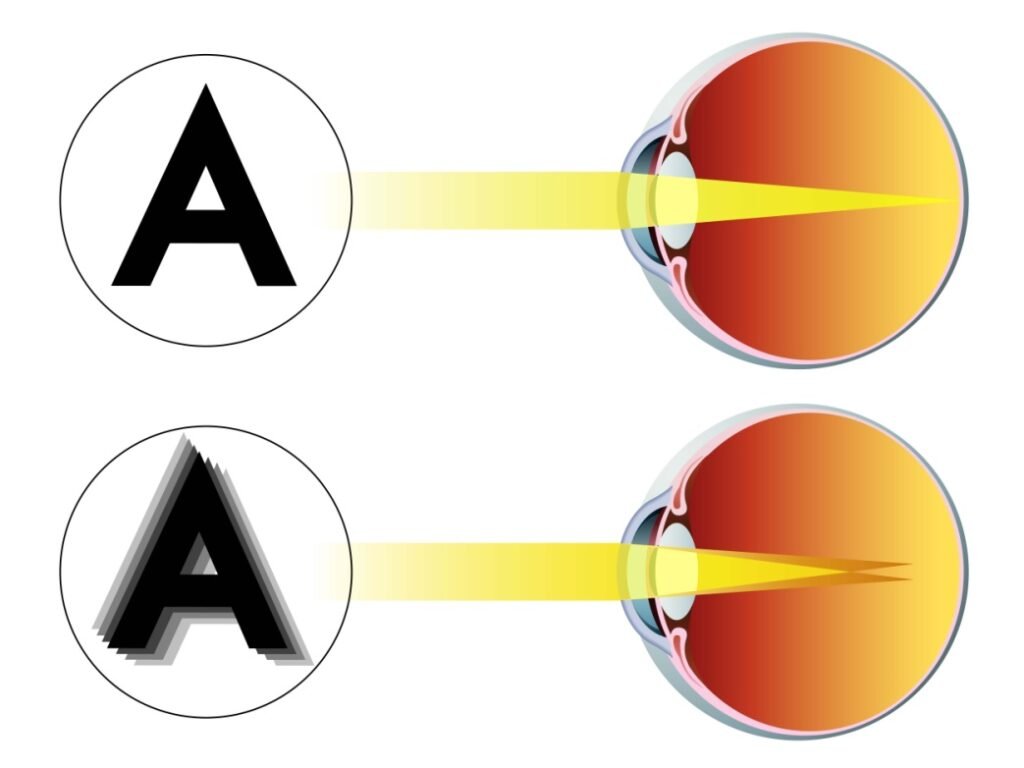
Astigmatism
Astigmatism is a common vision problem caused by an error in the shape of the cornea. With astigmatism, the front surface of the eye (the cornea) or the lens of the eye has an irregular curve, which can change the way light is passed to the retina (or refracted). This causes blurry, fuzzy, or distorted vision. Farsightedness and nearsightedness (hyperopia and myopia) are two other types of refractive errors.
What Causes Astigmatism? It is not known what causes astigmatism, but genetics is a big factor. It is often present at birth, but may develop later in life. It may also occur as a result of an injury to the eye or after eye surgery. Astigmatism is often accompanied by nearsightedness or farsightedness
Types of Astigmatism
The two main types of astigmatism are:
Corneal Astigmatism
A corneal astigmatism is when the cornea is misshapen.
Lenticular Astigmatism
A lenticular astigmatism is when the lens is misshapen.
Who Is at Risk For Astigmatism?
Astigmatism can occur in children and adults. Your risk of developing astigmatism may be higher if you have any of the following:
a family history of astigmatism or other eye disorders, such as keratoconus (a degeneration of the cornea)
scarring or thinning of the cornea
excessive nearsightedness (blurry vision at a distance) or farsightedness (blurry close-up vision)
a history of certain types of eye surgery, such as cataract surgery (surgical removal of a clouded lens)
your risk of developing astigmatism may be increased if your mother smoked when she was pregnant with you, according to a study published in the October 2011 issue of Ophthalmology
Recognizing the Symptoms of Astigmatism
The symptoms of astigmatism may differ in each person. Some people do not experience any symptoms at all. Symptoms of astigmatism include:
Blurry, distorted, or fuzzy vision at all distances (close-up and far away)
Difficulty seeing at night
Eyestrain
Squinting
Eye irritation
Headaches
See a doctor if you experience symptoms of astigmatism. Some symptoms may also be caused by other health or vision problems.
How is Astigmatism Diagnosed?
Astigmatism is diagnosed by an optometrist (a licensed healthcare professional who diagnoses vision problems and eye diseases), or an ophthalmologist (a medical eye doctor who provides medical and surgical treatment of vision problems and eye diseases), through a comprehensive eye examination. Tests optometrists and ophthalmologists may use during your eye examination to diagnose astigmatism include:
Visual Acuity Assessment Test (VAT)
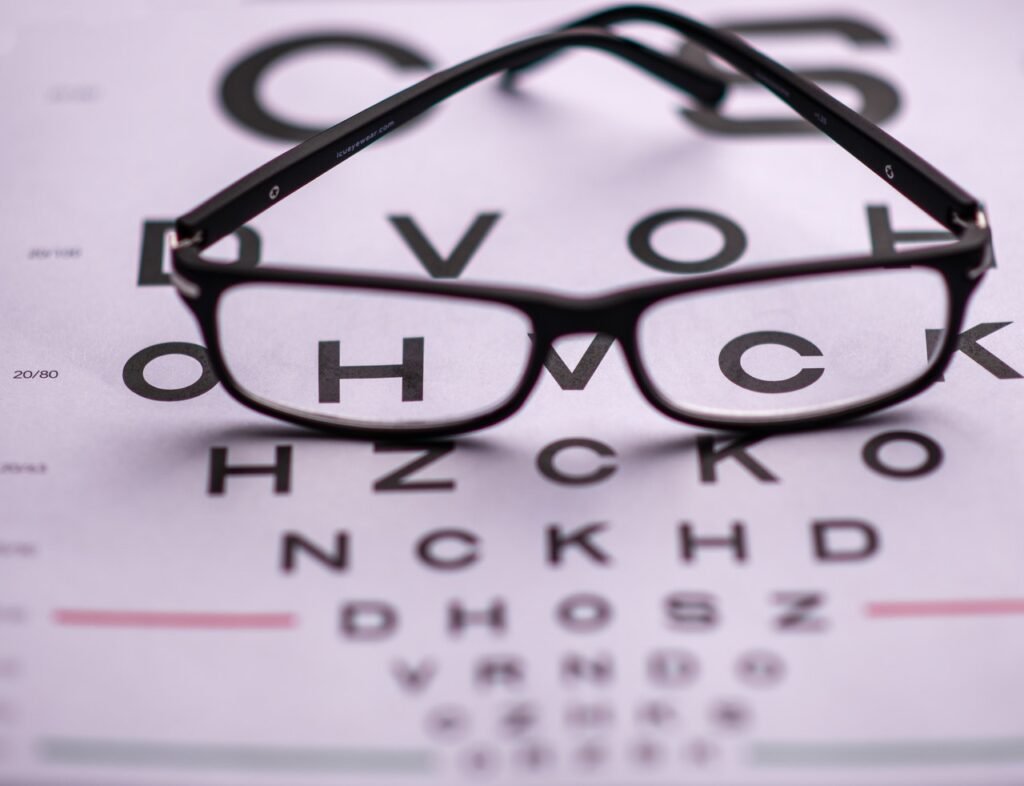
During a VAT, your optometrist or ophthalmologist will have you read letters from a chart at a specific distance to determine how well you can see the letters.
Refractor Test
A refractor test is performed using a machine called an optical refractor. The machine has multiple corrective glass lenses (like eyeglass lenses) of different strengths. Your optometrist or ophthalmologist will ask you to read a chart while looking through different strength lenses on the optical refractor, until he finds a lens that appropriately corrects your vision.
Keratometry
During a keratometry examination, your optometrist or ophthalmologist will look at your eye through a keratoscope machine to detect and measure the curvature of your cornea.
Treatment of Astigmatism.
Mild cases of astigmatism may not require treatment. Astigmatism that causes vision problems may be treated by an optometrist or ophthalmologist using one of the following methods:
Corrective Lenses
Corrective eyeglasses and contact lenses prescribed by an optometrist or ophthalmologist are the most common and least invasive treatment for astigmatism.
Orthokeratology (Ortho-K)
Ortho-K is a treatment that uses rigid contact lenses to temporarily correct the irregular curvature of the cornea. The rigid contact lenses are worm for limited periods of time, such as during sleep, and removed during the day. Some people are able to achieve clear vision during the day without corrective lenses when undergoing Ortho-K. The benefits of Ortho-K disappear when it is discontinued, and vision usually returns to what it was before treatment.
Surgery
For severe cases of astigmatism, your doctor may recommend refractive surgery. This type of surgery uses lasers or small knives to reshape the cornea to permanently correct astigmatism. The three common surgeries for astigmatism are laser in situ keratomileusis (LASIK), photorefractive keratectomy (PRK), and radial keratotomy (RK). All surgeries carry some risks. Talk to your doctor about the risks and benefits before getting surgery for astigmatism.
Presbyopia
Astigmatism is a common vision problem caused by an error in the shape of the cornea. With astigmatism, the front surface of the eye (the cornea) or the lens of the eye has an irregular curve, which can change the way light is passed to the retina (or refracted). This causes blurry, fuzzy, or distorted vision. Farsightedness and nearsightedness (hyperopia and myopia) are two other types of refractive errors.
What Causes Astigmatism? It is not known what causes astigmatism, but genetics is a big factor. It is often present at birth, but may develop later in life. It may also occur as a result of an injury to the eye or after eye surgery. Astigmatism is often accompanied by nearsightedness or farsightedness
Causes of Presbyopia
When you’re young, the lens in your eye is flexible and relatively elastic. It can change its length or shape with the help of a ring of tiny muscles that surround it. The muscles that surround your eye can easily reshape and adjust the lens to accommodate both close and distant images. With age, your lenses and the muscle fibers surrounding the lenses slowly lose flexibility and stiffen. As a result, your lenses become unable to change shape and constrict to focus on close images. With this hardening of your lenses, your eye gradually loses its ability to focus light directly on to the retina.
Risk Factors for Presbyopia
The most significant risk factor for presbyopia is age. Most people lose some ability to focus on close objects by age 40. It affects everyone, but some people notice it more than others.
Certain diseases or drugs can cause presbyopia in people younger than age 40. When the symptoms of presbyopia occur earlier than usual, it is called premature presbyopia. If you notice the symptoms of presbyopia at an age earlier than the normal onset, it may be a warning of an underlying medical condition.
You are at a higher risk for premature presbyopia if you have:
anemia (lack of enough or normal blood cells)
cardiovascular disease
diabetes (difficulties metabolizing blood sugar)
hyperopia (farsightedness, or greater difficulty seeing near objects)
multiple sclerosis (an autoimmune disease that affects the spine and brain)
myasthenia gravis (a neuromuscular disorder that affects the nerves and muscles)
eye trauma or disease
vascular insufficiency (poor blood flow)
Some prescription and over-the-counter drugs can reduce your eye’s ability to focus on close images. Taking the following drugs can put you at a higher risk for presbyopia:
alcohol
antianxiety drugs
antidepressants
antihistamines
antipsychotics
antispasmodics
diuretics
Other considerations that may put you at a higher risk for the earlier onset of presbyopia are:
being female
having had intraocular (eye) surgery
eating an unhealthy diet
having decompression sickness, also called “the bends,” which results from rapid decompression; it typically occurs in scuba divers that surface too quickly
living closer to the equator (giving you more exposure to ultraviolet radiation and higher temperatures)
Symptoms of Presbyopia The most common symptoms of presbyopia occur at around age 40 for most people. Signs of presbyopia typically involve a gradual deterioration of you ability to read or do work up close
Common symptoms related to presbyopia are:
eyestrain or headaches after reading or doing close work
difficulty reading small print
fatigue from doing close work
need for brighter lighting when reading or doing close work
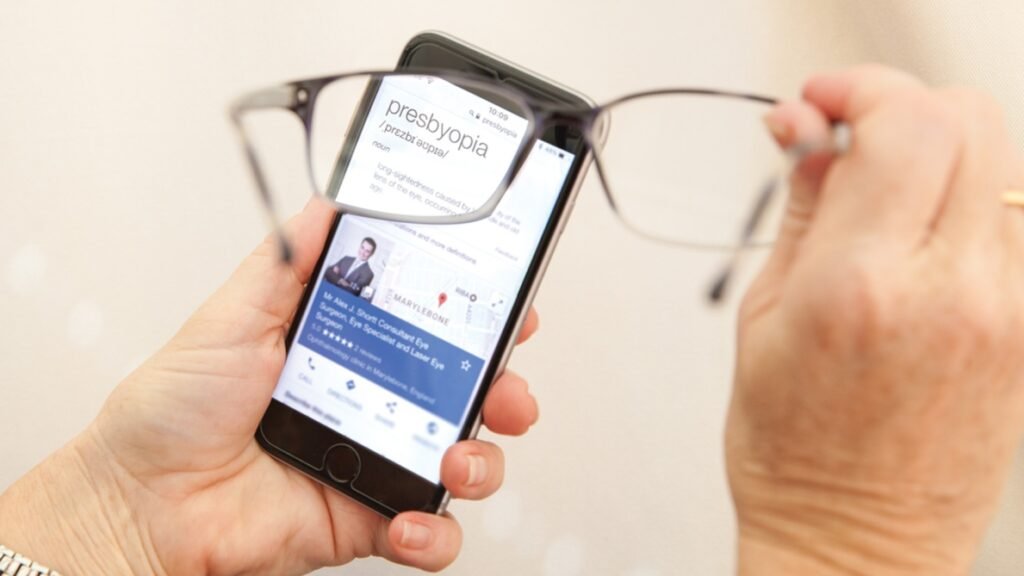
need to hold reading material at an arm’s distance to properly focus on it
overall problems seeing and focusing on objects that are close to you
squinting
Hyperopia is a condition that has symptoms similar to presbyopia. However, they are two different disorders. In hyperopia, as in presbyopia, distant objects are clear, but closer objects appear blurred.

Treatment of Presbyopia
No cure exists for presbyopia, but there are several alternatives available to correct your vision. Depending on your condition and lifestyle, you may be able to choose from corrective lenses, contact lenses, or surgery to correct your vision.
Non-prescription reading glasses may be sufficient if you did not need eyeglasses before the onset of presbyopia. These “readers” typically are available at retail stores such as drug stores. They typically work best when reserved for use during reading or close work.
When selecting a pair of over-the-counter reading glasses, try different degrees of magnification. Select the lowest magnification that allows you to read a newspaper comfortably.
You will need prescription lenses for presbyopia if you can’t find an appropriate magnification from the non-prescription offerings. You also will need a prescription if you already have lenses to correct another refractive error. There are several variations of prescription lenses, many of which are described below.
Prescription reading glasses can be prescribed if you have no other problems other than presbyopia and prefer not to purchase your glasses off the shelf.
Bifocals have two different types of focus with a noticeable line between them. The upper portion is set for distance while the lower portion is set for reading or close work.
Progressive lenses are similar to bifocal lenses. However, they do not have a visible line. They offer a more gradual transition between the distant and close portions of the prescription.
Trifocals have three different points of focus. The portions are set for close work, mid-range, and distance vision. They can be made with or without visible lines.
Bifocal contact lenses provide the same option as bifocal glasses.
Monovision contact lenses require that you wear a contact lens set for distance vision in one eye and a different contact lens set for close work in your other eye.
Modified monovision contact lenses require that you wear a bifocal contact lens in one eye and a contact lens for distance in your other eye. Both eyes are used for distance. Only one eye is used for reading. Your brain adjusts to use the right lens for the distance of the image being processed.
Because your eyes will continue to gradually lose more of their ability to focus on close objects, your prescription will have to be reviewed and changed according to the advice of your eye specialist.
There are several surgical options to treat presbyopia, such as:
Conductive keroplasty (CK) uses radiofrequency energy to change the curvature of the cornea. While effective, the correction may diminish over time for some people
Laser-assisted in-situ keratomileusis (LASIK) can be used to create monovision. This adjustment corrects one eye for near vision and the other eye for distance.
Refractive lens exchange involves the removal of your natural lens. It is replaced with a synthetic lens, called an intraocular lens implant, inside your eye.
Hyperopia occurs when the eye is shorter than normal or the cornea is too flat. With these malformations, the light rays focus behind the retina, as in presbyopia. However, hyperopia is a refractive error that is present at birth, while presbyopia occurs with age. It is possible to have hyperopia and then develop presbyopia.
Complications of Presbyopia
If presbyopia is undiagnosed or uncorrected, your vision will likely deteriorate gradually and become increasingly intrusive to your lifestyle over time. If a correction is not made, you may experience a significant visual disability. You will develop problems maintaining your usual levels of activity and productivity at work and in everyday activities. When tasks such as reading small print become difficult and remain untreated, you are at risk for headaches and eyestrain.
Since everyone develops presbyopia as they age, it is possible to have presbyopia in addition to another type of refractive error. Presbyopia can combine with:
astigmatism (an imperfection in the curvature of the cornea that causes blurred vision)
hyperopia
myopia (nearsightedness)
It also is possible to have a different type of refractive error in each eye.
Diagnosis of Presbyopia
Contact your physician or eye specialist if you have any of the symptoms associated with presbyopia. Even if you are not experiencing symptoms, you should have an eye examination by age 40.
According to the American Academy of Ophthalmology, adults who do not have any symptoms or risk factors associated with eye disease should have a baseline examination at age 40. An eye screening can identify early signs of disease and vision changes that can begin, sometimes without any symptoms, at this age
Presbyopia can be diagnosed as part of a comprehensive eye examination. A typical exam will include tests to evaluate your eyes for the presence of diseases and vision disorders. It is likely that your pupils will be dilated with special eye drops to allow your physician to examine inside your eye.
Leave a Reply